The Arctic Sustainable Arts and Design (ASAD) network played an active role in the Arctic Arts Summit 2026 in Umeå, Sweden, bringing together artists, researchers, educators, and cultural practitioners to explore the relationships between art, education, knowledge, communities, and Land.
Held in Umeå on 16–17 June 2026, the programme included two ASAD-connected panels and Relate North: Show and Tell, the network’s annual symposium and exhibition. Together, these events highlighted the role of artistic practice, art education, craft, and research in exploring northern experiences and supporting sustainable and transformative futures.
Land-Based Art Learning
On 16 June, Maria Huhmarniemi, UArctic Chair in Arctic Art and Design, from the University of Lapland moderated the panel Land-Based Art Learning. The panel brought together Timo Jokela from the University of Lapland, Mette Gårdvik from Nord University, Gunvor Guttorm from Sámi allaskuvla, and Tarsh Bates from Umeå University.
The panel focused on socially engaged and Land-Based artistic and educational practices embedded in communities. It explored how contemporary education and research could contribute to more sustainable ways of living by strengthening relationships with Land and communities.
Indigenous Land-Based Education, environmental education, and place-based approaches offered important perspectives on learning as inseparable from place and community. The panel also considered the potential of Land-Based approaches for the decolonisation of education and for renewing relationships between Indigenous peoples, other Northerners, their cultures, and Land.
A central question was how Land could be recognised as a vibrant and generous teacher within new genre Arctic art and art education.
The contibution by Shannon Leddy from the University of British Columbia is recorded in a video.
Crafting Knowledge
The second ASAD-connected panel, Crafting Knowledge, was also moderated by Maria Huhmarniemi. The panel brought together Lotta Lundstedt from Umeå University, artists Monica Edmondson, and curator and researcher Ekaterina Sharova.
The panel examined how knowledge was produced through making and how craft practices carried cultural, embodied, and intergenerational knowledge. Particular attention was given to Sámi duodji, where making is deeply connected with Land, local materials, livelihoods, cultural identity, and heritage.
The discussion also explored contemporary approaches to heritage craft, including the ways in which traditional knowledge was renewed through new techniques and materials. From a feminist perspective, the panel highlighted often-overlooked forms of embodied, care-based, and intergenerational knowledge embedded in craft practices.
Importantly, Crafting Knowledge also invited the audience to participate in making. Participants were encouraged to bring their own craftwork and continue working throughout the session, turning the panel into a shared space for dialogue, reflection, and hands-on knowledge production.
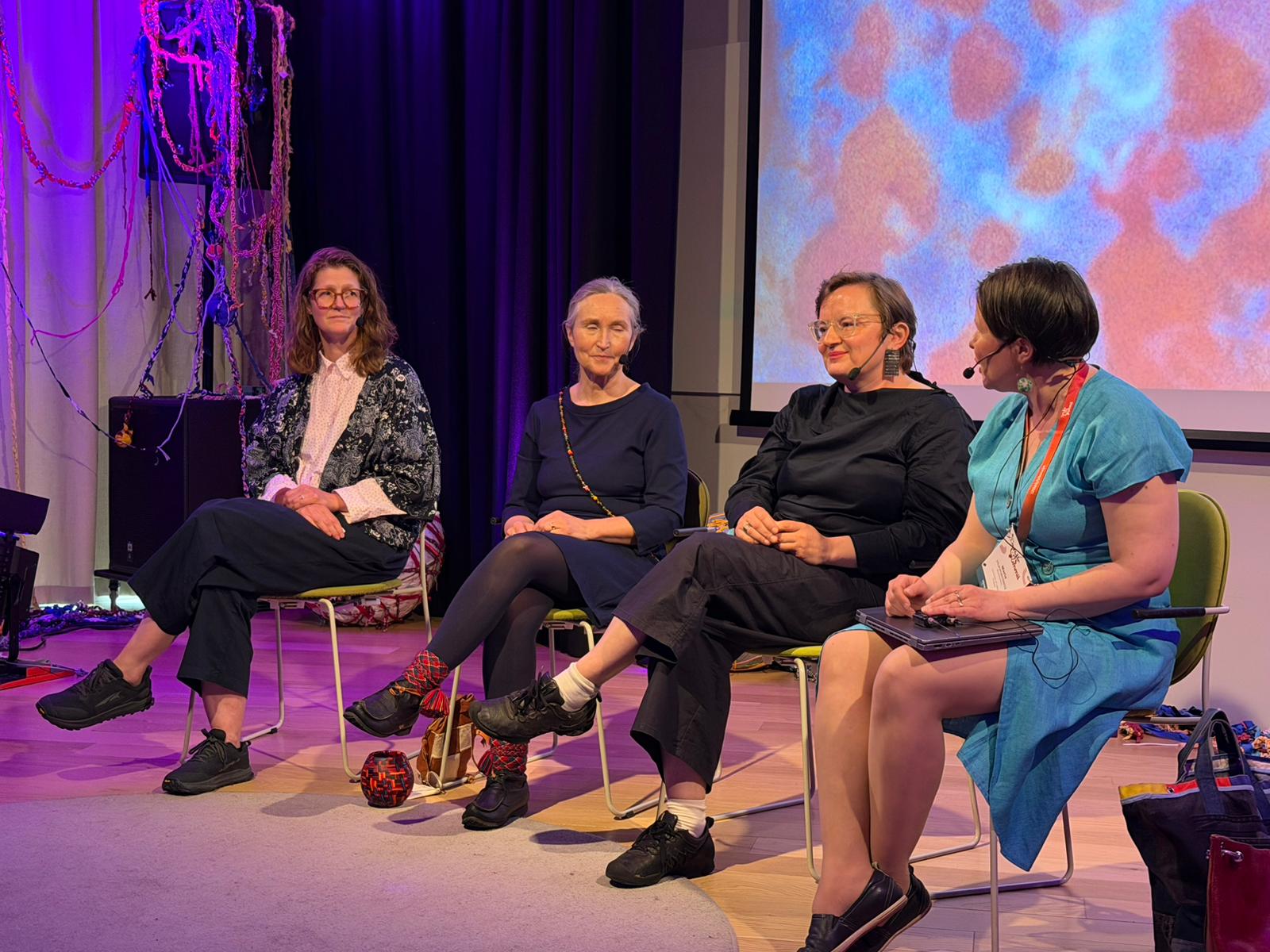
Photograph: Nicole Klenk
Relate North: Show and Tell
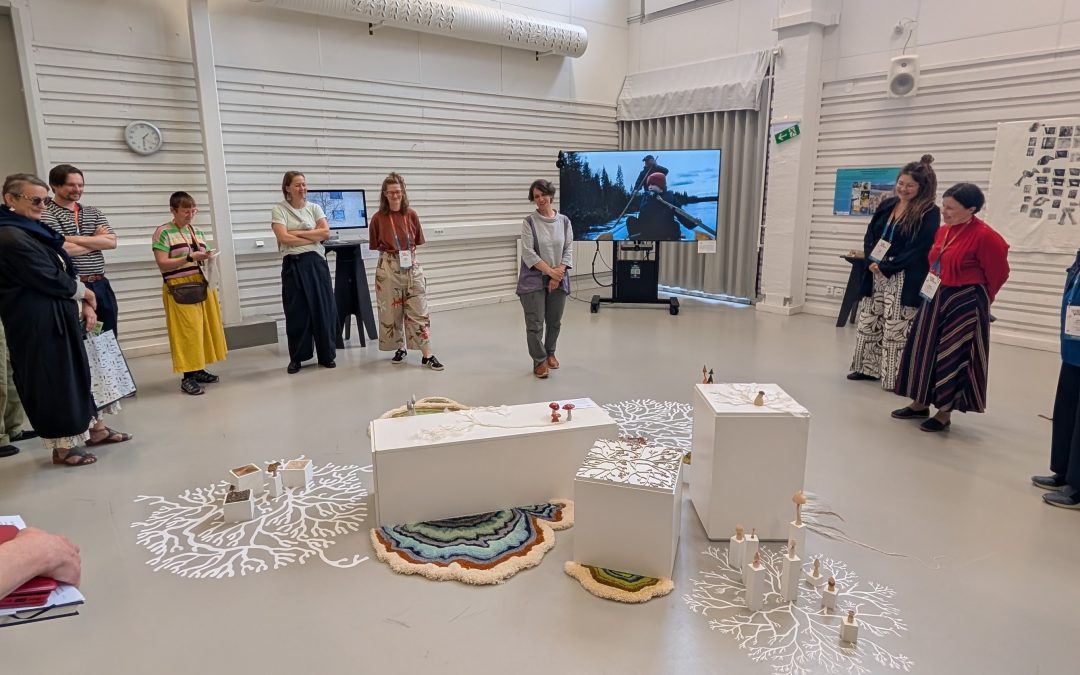
On 17 June, ASAD presented Relate North: Show and Tell at the Project Space of the Umeå Institute of Design at Umeå University’s Arts Campus.
Relate North is ASAD’s annual symposium and exhibition. The 2026 event was organised under the theme Land, Power, Art and was presented in collaboration with Umeå University, UmArts, and the University of Lapland as part of the Arctic Arts Summit.
Rather than taking the form of a conventional academic conference session or gallery exhibition, Relate North: Show and Tell created an open and conversational forum. Artist-researchers and designer-researchers presented artworks and research posters while remaining present alongside their work, allowing participants to engage directly with the creative processes, questions, and forms of knowledge embedded in the practices.
Through informal encounters and conversation, the event created opportunities for new connections between artists, researchers, educators, viewers, and communities. Rather than presenting art as a finished outcome, Show and Tell foregrounded artistic practice as an open-ended and processual form of knowledge production grounded in relationships with Land and place.
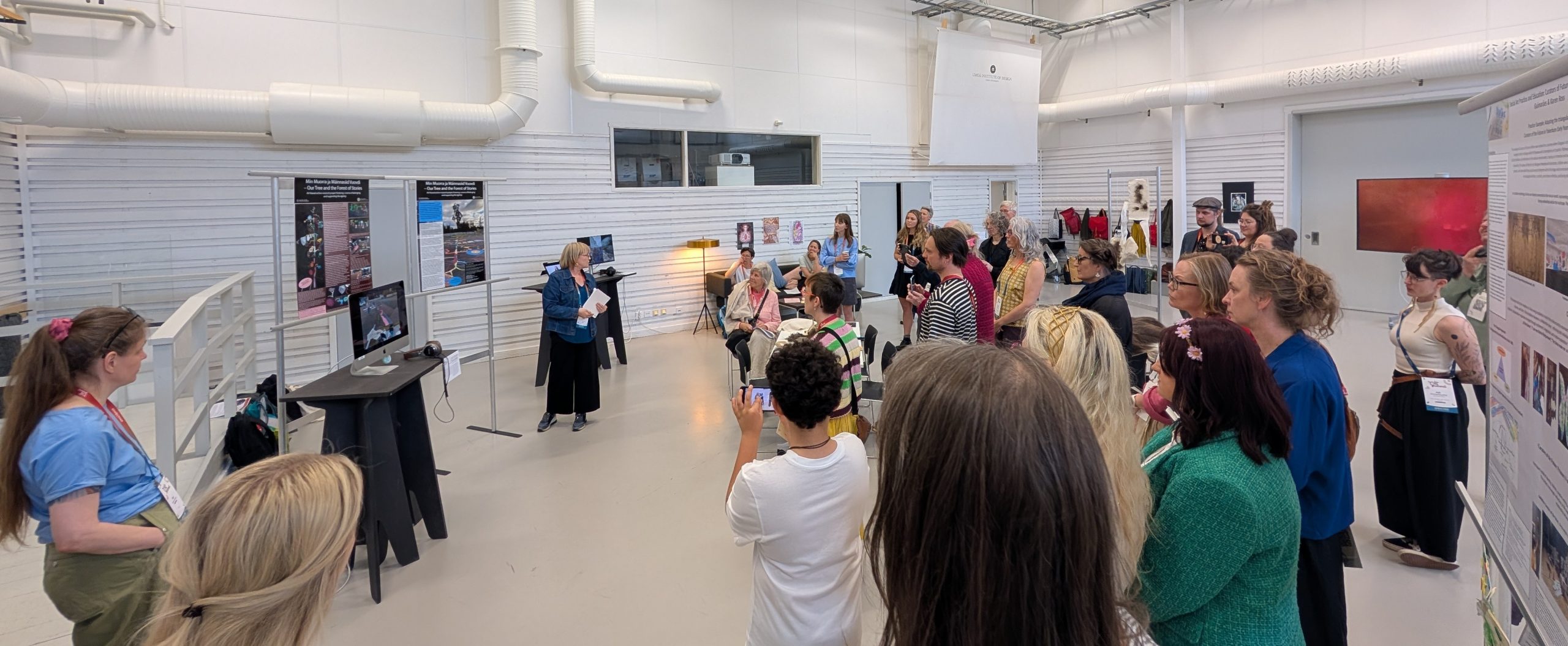
Photograph by Tarsh Bates, 2026
Strengthening research collaboration across the North
The ASAD programme at the Arctic Arts Summit demonstrated the network’s commitment to connecting art, design, education, and research across the circumpolar North. The panels and Relate North: Show and Tell brought together different forms of knowledge and practice, from Indigenous Land-Based education and Sámi craft traditions to contemporary art, design research, and participatory pedagogy. We are thankfull for the Arctic Arts Summit event to welcome research into the event.
Together, the events highlighted how artistic and educational practices could contribute to understanding—and shaping—sustainable transformations in northern communities. They also demonstrated the importance of networks such as ASAD in creating spaces where artists, educators, researchers, and communities could meet, share knowledge, and develop new forms of collaboration.